

SPECIALIST CONTROL

Industrial Facility Automation & Energy Management

CONTROL OBJECTIVE

Relate industrial-building conditions, HVAC, plants, utility status and energy metering without crossing into production-process or safety control.

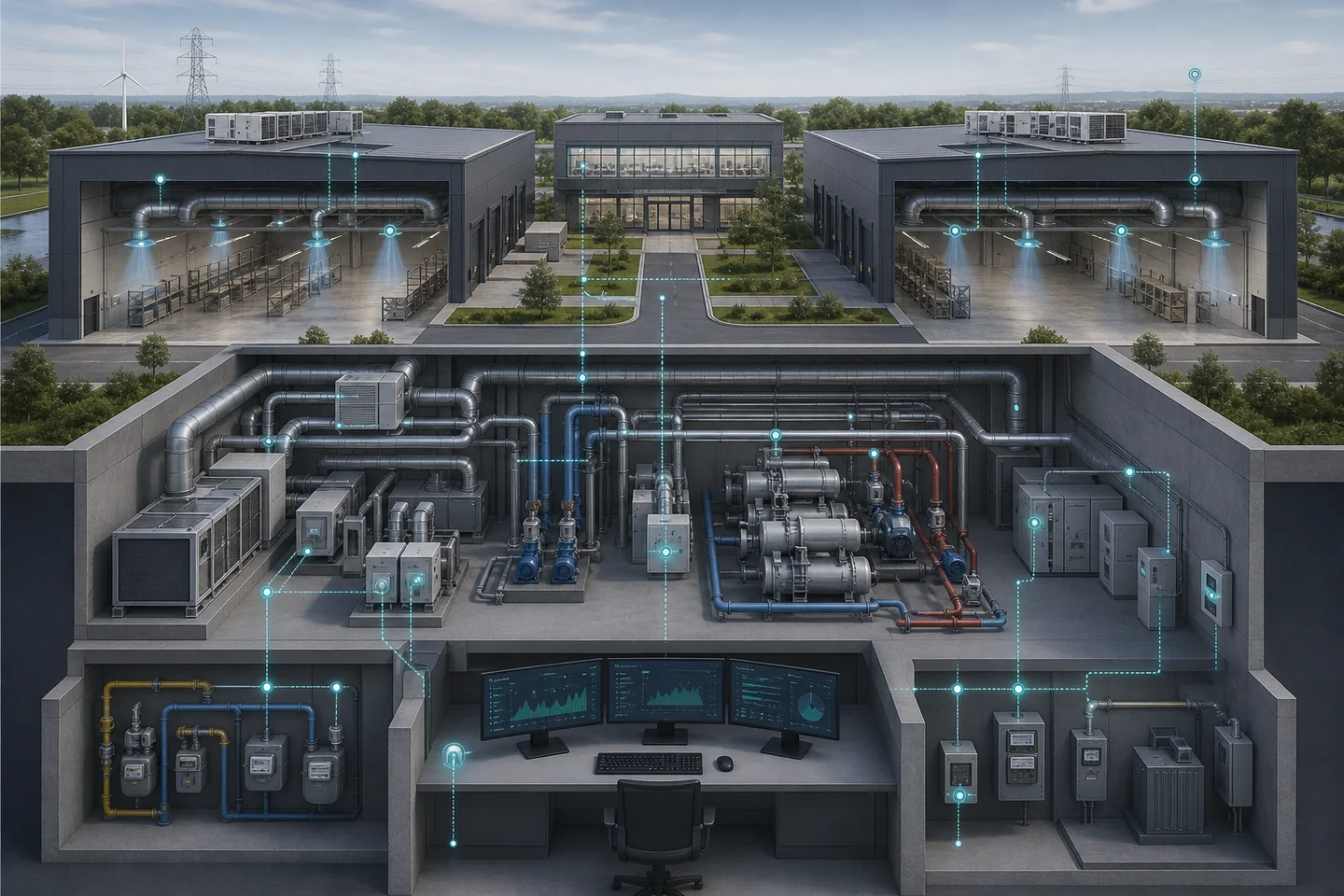
Original concept visual of coordinated industrial buildings, utilities, HVAC plants and energy metering

WHAT THE SYSTEM MUST DO

Coordinated utilities, energy data and equipment state

  • Production-space HVAC and ventilation
  • Central plant and utility coordination
  • Electricity, water, gas and thermal metering
  • Alarm, trend and operating-strategy review
01

The operating problem

Industrial campuses often spread facilities across production, office and support buildings, utility plants and external networks. HVAC, central plants, water services and supporting utilities may use mixed generations of controls, while energy data remains distributed across meters and platforms. A central screen or utility report alone does not explain inefficient equipment, persistent overrides or out-of-hours operation. Facilities automation and energy data need a shared operating context without crossing into production-process or safety control.

02

The objective

Kimma structures the relationship between building conditions, HVAC, central plants, utility status, energy metering, alarms and trends within the facility-management scope. The objective is to give operators a clear view of command, feedback, submetered energy and critical operating conditions, then use confirmed schedules, setpoints and equipment combinations for facility-side improvement. The solution does not replace PLC, DCS, SIS, ESD, MES, fire systems or production-process control, and it does not promise unverified energy savings.

03

How the system works

  1. Zoned environmental sensing is related to air-handling, ventilation, pumps, valves and other agreed facility equipment. Fast interlocks and manufacturer protection remain local while the platform manages modes, alarms, trends and cross-area coordination.
  2. Central plants, heat exchange, water systems and confirmed supporting utilities are staged against availability, demand, schedules and supply/return conditions. Any action affecting production continuity or safety requires approval from the responsible discipline; building controls do not bypass process or equipment protection.
  3. Electricity, water, gas and thermal data is organised by campus, building, system or significant equipment and compared with operating state and schedules. Analysis can identify metering gaps, prolonged unloaded operation, setpoint drift and strategy issues, with any change verified and recorded.
04

The practical outcome

The outcome is a facility-side controls and energy framework that relates building conditions, utilities, central plants and submetered use within defined boundaries. Alarms and trends support diagnosis, while schedules, setpoints and equipment combinations become reviewable. Actual coverage depends on interfaces, metering and authority; production process, safety-instrumented and fire systems remain under their responsible disciplines.

SCOPE BOUNDARY

Facility automation and energy management—not production-process control.

This solution covers agreed building conditions, HVAC, central plants, water and supporting utilities, metering, alarms and trends. PLC, DCS, SIS, ESD, MES, fire protection, machinery safety and production-process control remain outside this solution unless a formally defined read-only interface is agreed.

PROJECT & TECHNICAL ENQUIRIES

Need to structure facility operation and energy data across an industrial campus?

Share campus-building, HVAC, plant, utility, metering and current-platform information to frame facility automation, data interfaces and discipline boundaries.

PAGE POSTER

Share a clear project introduction